
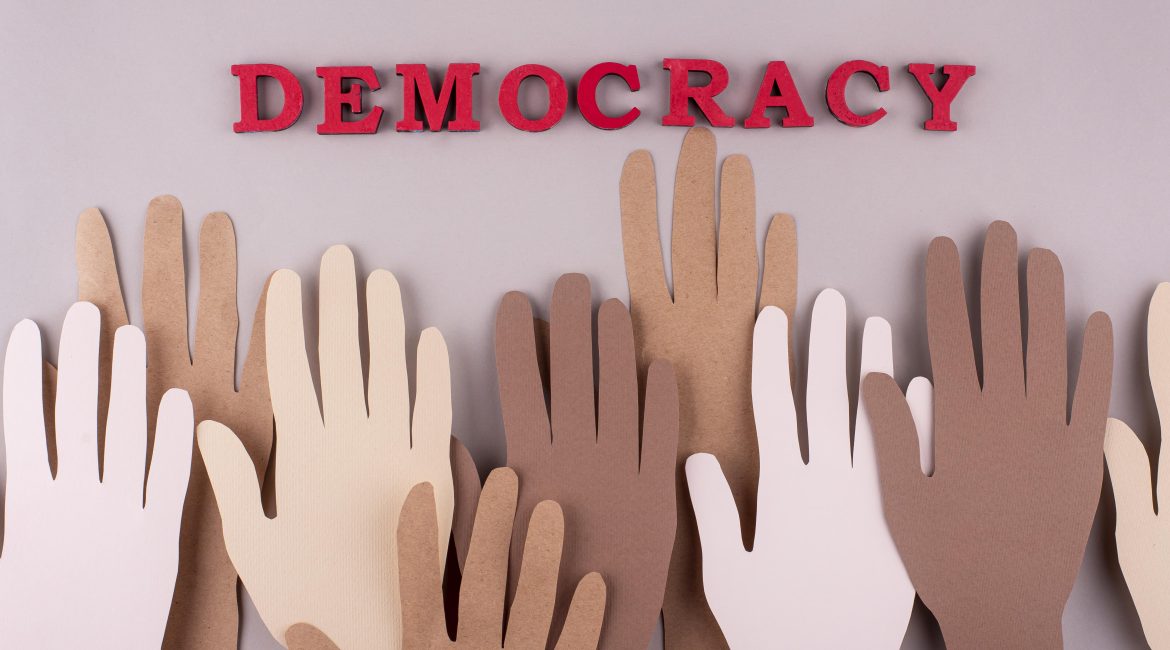
Whether the Lebanese parliamentary elections are held on schedule next May or they are postponed for technical or non-technical reasons, little is expected from them, and that reflects, in some ways, the fragility of “Lebanese democracy”.
There are many pitfalls to this “democracy”, beginning from the sectarian and religious stain that disrupts always the political system and turns it into a detestable scheme of power-sharing and patronage, to the political division that translates itself into the overthrow of constitutional norms and provisions, in addition to many other issues that have left scars on Lebanese political life, from which recovery does not seem easy or available in the foreseeable future.
The state remains the weakest force in Lebanon, both in terms of internal factions and external actors, most notably the Israeli occupation, which constantly violates Lebanese sovereignty. It goes without saying that Lebanon is facing a very serious dilemma regarding the situation that has arisen after the recent Israeli war on it. What was called the “balance of deterrence” has been dealt a fatal blow, and rebuilding it does not seem possible, especially after the fall of Bashar al-Assad’s regime in December 2024, and in light of the challenges facing Iran.
The situation of the Lebanese state is neither easier internally, as it faces almost daily challenges from powerful forces accustomed to wielding excessive force, and from political factions that are not genuinely interested in the establishment of a strong and capable state that can fulfil its political, economic, and social obligations. A long road lies ahead to restore the state's image and prestige and strengthen its role in various fields, beginning with the consolidation of arms' control through the extension of its authority over all its territory, and culminating in its fulfilment of its responsibilities in economic and social development.
Certainly, the times no more exist when the Lebanese state took matters into its own hands and exercised its responsibilities, and when it became clear that it had the required ability to do so, and that citizens and political parties alike dealt with it with a great deal of seriousness and caution. Instead, the times when it reflected laxity and retreat, it was subjected to more shattering and abuse and reinforced its image as the weakest link among the players, while it is supposed to be the strongest.
In conclusion, experience and direct political proof have demonstrated that the state project in Lebanon is a sensible endeavor, and that no party, regardless of its power, can do without this state, which is the common denominator among all Lebanese, with their diverse affiliations, backgrounds, and orientations. Today, genuine opportunities have appeared for Lebanon and the Lebanese people, under this presidential term and the current government, to truly change the situation for the better, and to embark on the tough path of reform that has so often faltered at the start.