
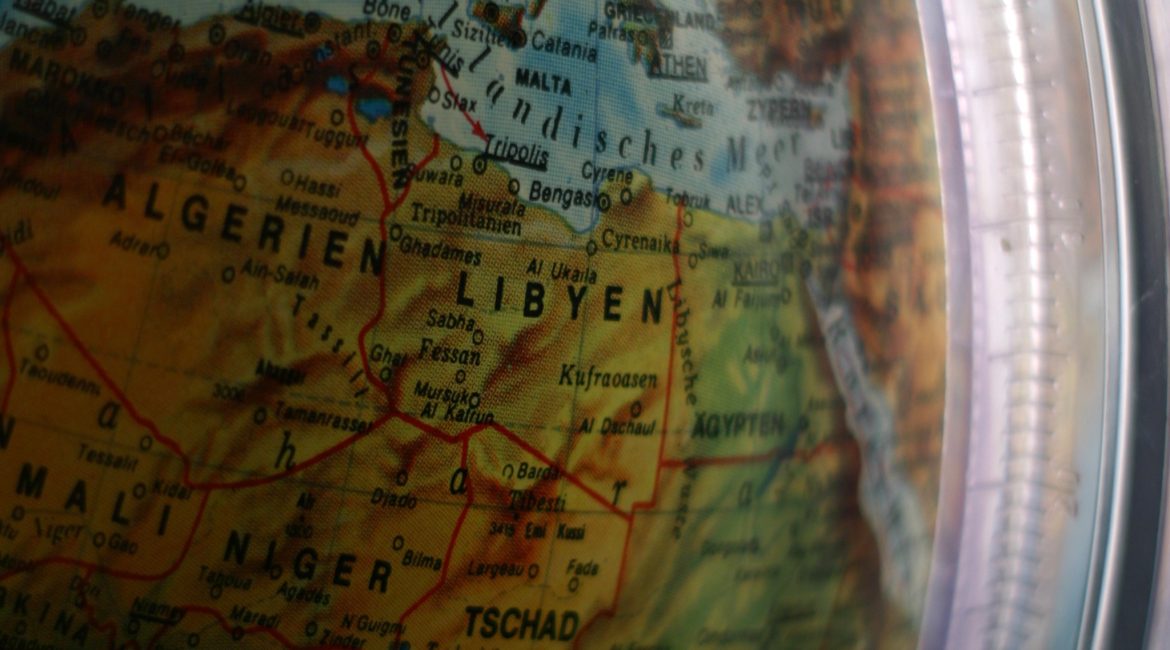
It can be said that the Libyan army’s regaining control of more than 70 percent of Libyan territory is a national achievement, but the capital, Tripoli, and its surroundings, are still under the rule of militias.
The word "militia" is actually a foreign term in the Arabic lexicon, particularly in Libyan idiom. It is a Latin term meaning "an irregular military organization operating outside the authority of the state." Armed militias are used by political groups and parties during civil wars, periods of disorder, and weak central authority in any country to influence political decisions, making them a direct threat to freedom and democracy. Therefore, any armed formation operating outside the legitimacy of the state is considered a militia that threatens social harmony.
The phenomenon of militias was not known in Libyan history, but nowadays they often negatively interfere in public affairs, and they move around with armed displays without any reluctance.
With militias, Libya has become a lawless jungle where kidnapping and murder replace dialogue, in a state that is absent and subjugated. Behind these militias are some parties which try to impose their will. This is showed by the repeated attacks on sovereign and even service-oriented ministries in Tripoli, as well as the attempt to occupy Benghazi before the Libyan army regained a complete control.
The real solution to the Libyan crisis is to dissolve all militias and redistribute their members to other national defense institutions. But some argue for maintaining these militias, claiming they are necessary to protect the changes that occurred in the country. However, changes are inherently collective actions encompassing all segments of society. If they are confined to armed militias, they becomes a coup. If they are carried out by a single group, faction, or party, they becomes sectarian, because a revolution is only complete with the participation of all components of society.
What the country needs is clear: establishing security through the army and police, disbanding militias and tribal brigades, and activating an army with a purely national ideology. This is essential so that the people can live with dignity and enjoy their country's wealth, which has been lost due to stagnation in the recent years.
The presence of local militias, mercenaries, and foreign forces, especially within the capital, Tripoli, poses a significant security threat, represents a major demographic shift, and is a recipe for division and fragmentation, not only politically, but also geographically. Therefore, no independent government can function effectively without a capital city free of armed militias.