
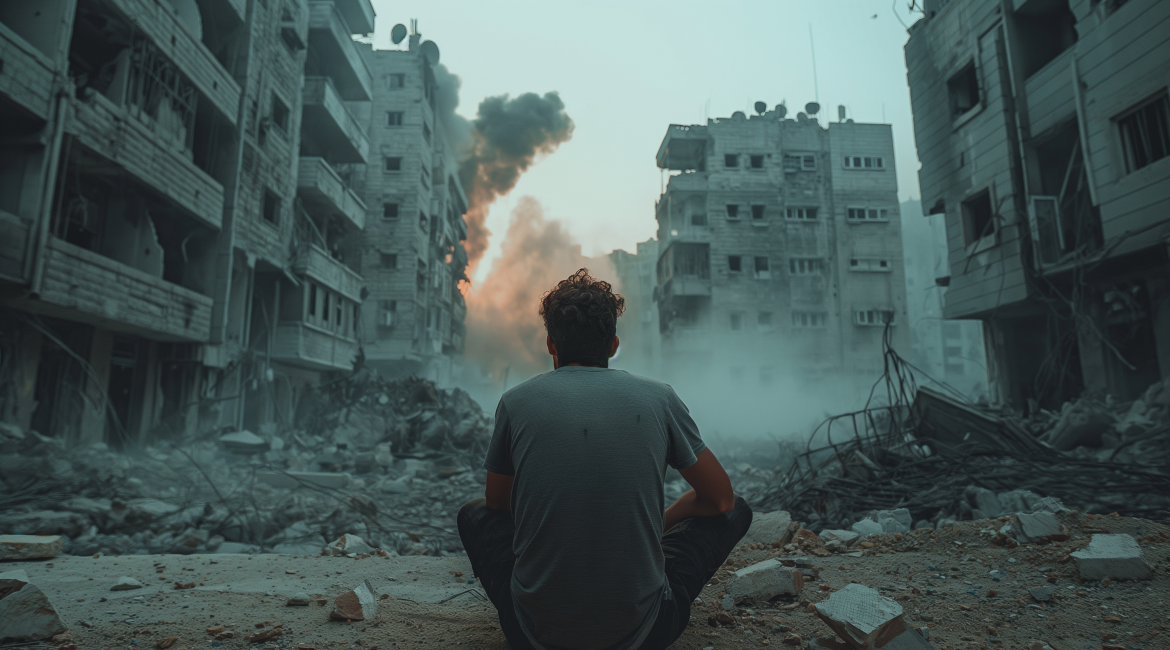
Recently, Hamas announced its acceptance of handing over its weapons to the National Committee for the Administration of the Gaza Strip, after months of controversy and rejection. This step went beyond merely signing an agreement, clearly reflecting a crisis of an ideological and doctrinal model adopted by Hamas, which ultimately accepted the surrender of weapons that it had considered for decades to be the symbol of the movement and the sole tool of struggle and resistance.
The truth is that the movement completely ignored the structural problems in its ideological structure and the world’s view of it, including a large segment of the Arab world, and the world’s classification of it as a terrorist organization, and imagined that the ideological structure of its members, and the sacrifices of many of them, would cover up the previous shortcomings.
The moment of handing over weapons and “authority” in Gaza to a technocratic committee, under the direction of a foreign entity, namely the Gaza Executive Council, should represent an recognition by Hamas of the defeat of its project and its political and military bets. If it is certain that the existence of an occupation that has let down the two-state solution in the West Bank and then besieged the Gaza Strip, does not mean that the tool for confronting it will necessarily be armed force, and that this option, if undertaken (especially in an operation the size of October 7), must have its consequences carefully calculated.
The surrender of weapons is only a chapter for the Hamas movement, and it does not mean the liquidation of the Palestinian cause or a decisive defeat for it, because it will not disappear at all. Rather, it is a “defeat by points” for a pattern of ideological and political thinking that the movement has adopted for decades. What Hamas leaders said, that it “will continue to play its civil and political role,” is a statement that comes at least two years late.
The problem is that Hamas members have become accustomed to a pattern of ideological thinking that considered civil and political struggle as merely an accessory to its military project, and the time has come for it to do the opposite. They also think that the difference between national liberation movements and armed militias is that the former does not consider carrying weapons as an end in itself, but rather as a means to serve the movement’s civil and political project, in order to achieve the great goal of independence and liberation.
The challenge for Hamas will remain its concept of civil and political presence among the people. It undoubtedly had a presence in the Palestinian street, but its main set-back is the lack of leaders capable of addressing the world, in order to support the Palestinian cause. This is in contrast to the Palestine Liberation Organization, which in previous periods included distinguished political leaders who were able to address the world and influence it, before it became stagnant and poorly performing in recent years under the Palestinian Authority.
If Trump’s plan is implemented, and Hamas surrenders its weapons and Israel withdraws from Gaza, the Palestinian cause needs new young leaders who transcend the duality of Hamas and the Palestinian Authority, and establish a new project capable of dealing with new global “civil and political” realities.